

How to do this
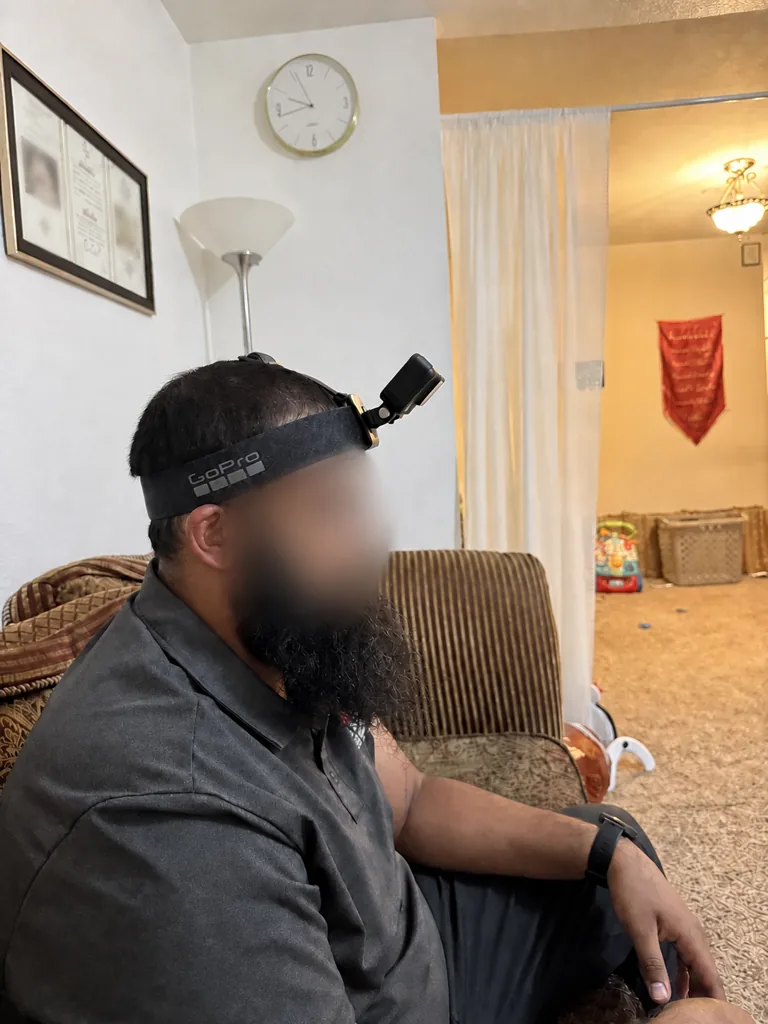
Angle the camera down so both hands and the active work surface fit inside the frame.
Secure the headband
Keep the camera stable and angle it toward the area where your hands will do the work.
Record a short test
Move through the full task motion once, then review the test before recording a longer clip.
Confirm the whole motion stays visible
Check that both hands, the material, and the active work area remain in frame from start to finish.
Examples from recent trade captures
Trim layout at a miter saw — Keep both hands, the material, and the tool area visible while laying out the next step.
Window-screen assembly — Frame close hand-tool work without cropping either hand out of the task.
Electrical lead preparation — Keep fine hand work and its immediate target visible at the same time.
Acceptance checks before capture
Head-mounted first-person view
Accepted footage uses the opentez headband and shows the task from the recorder’s
natural first-person point of view.
Both arms and hands in view
The delivered video must keep both arms and hands inside the frame during the captured
task.
Standard video format
Accepted footage uses normal Video mode, not Slo-mo, Time-lapse, or Cinematic, so
the deliverable preserves the task’s natural motion and speed. The image must be clear
and reasonably well lit.
Audio requirements
Unless a project specification calls for sound, accepted footage must exclude private
conversations. Any captured audio must comply with the project’s consent rules. A
Texas bystander’s recorded yes does not permit recording unrelated private
conversations.
Quality check
A short test can confirm that the deliverable will meet the framing, privacy, and image
quality specifications before a longer clip is captured.
Acceptance specifications for submitted footage
Continuous task footage
The accepted portion must show natural, continuous work on the captured task.
Task-focused deliverable
Clean, task-focused video is more likely to qualify than footage containing unrelated
activity or interruptions.
Active portions only
Only portions showing active performance of the captured task count toward the
accepted footage-hour measurement. Idle stretches and breaks are excluded from the
deliverable measurement.
Hands remain in frame
The accepted portion must keep the recorder’s hands in frame. Portions where the hands
are not visible do not qualify as part of the accepted deliverable.
The golden rule
The Golden Rule
Hands · doing real work · in frame
If that’s true for the whole clip, you’re almost certainly recording something we can pay for.Taking a break
Separate clips make it easier to submit a clean deliverable without idle portions.Safety comes before footage, always
Next: Privacy and consent
Keep PII out and know exactly what to do if an adult enters the frame.